


Apprenticeships After College
Put Your Education to Work. Get Paid. Gain Experience.
Already have a college degree—or approaching graduation? An apprenticeship can offer a way to apply your education, develop practical skills, and gain paid work experience.
You might want to build experience in your field, explore a different occupation, or change careers. Apprenticeship combines employment with mentoring and training connected to the work.
A degree does not automatically rule out participation. Entry requirements vary by employer, occupation, and program.
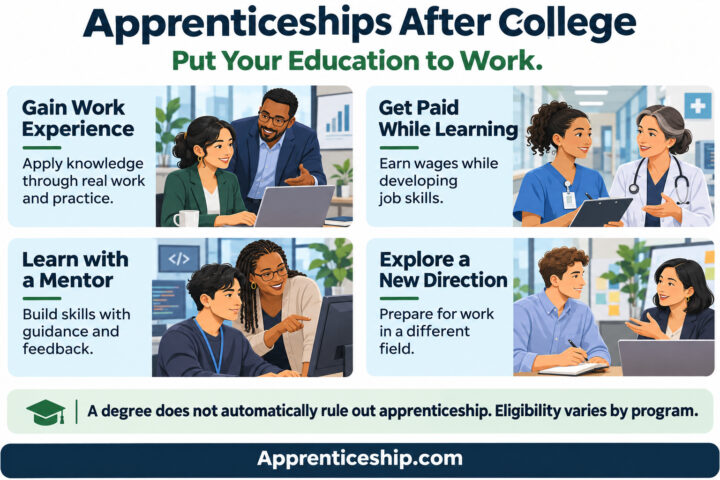
Why Consider an Apprenticeship After College?
Turn Learning into Practical Experience
- Use your knowledge while learning how work is performed in a particular occupation or organization. Develop skills through assignments, practice, feedback, and increasing responsibility.
Earn While Developing Skills
- An apprenticeship includes a paid job. Compare starting wages, benefits, hours, and opportunities for pay increases with your financial needs and other employment options.
Learn with an Experienced Mentor
- Build your capabilities with guidance from someone who knows the work. Ask how mentoring is organized, who will supervise you, and how your progress will be reviewed.
Prepare for a Different Career
- Your degree does not have to determine your entire working life. An apprenticeship may provide a structured way to prepare for another occupation while bringing your existing knowledge and experience with you.
What Would You Do as an Apprentice
- You work for an employer while completing training designed around the job. Workplace learning is supported by guidance from experienced workers and related instruction.
- Depending on the program, instruction may include classes, online learning, laboratory practice, or training provided by an employer, college, or another organization.
- Ask for specific examples of the work you will perform, the skills you will develop, and the responsibilities you can expect as you progress.
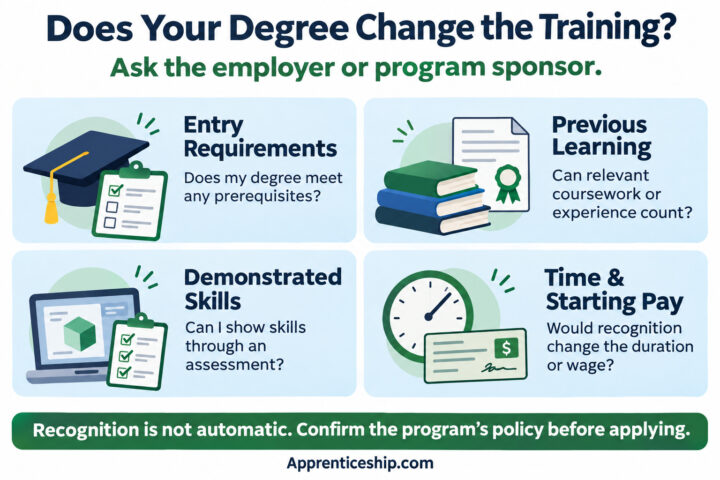
Does Having a Degree Change the Requirements?
Having a degree does not automatically mean that you qualify, need less training, or can skip program requirements.
Some programs may recognize relevant education or experience. Others require participants to complete the same assessments and training regardless of their previous qualifications.
Ask the employer or program sponsor:
- Does my degree meet any education prerequisites?
- Can relevant coursework or experience receive credit toward training?
- Are assessments available to demonstrate skills I already have?
- Would any recognition affect the program’s duration or starting pay?
- Are there additional requirements, such as a license, examination, or specific coursework?
Get confirmation before assuming your previous education will shorten the program.
Explore the Career Before Choosing a Program
Start with the work you want to do—not simply the availability of an apprenticeship.
The Apprenticeship Career Catalog can help you explore:
- What workers do in different occupations.
- Where they work and what conditions to expect.
- The skills and preparation involved.
- How tools, technology, and job responsibilities are changing.
- Apprenticeship and related ways to gain experience where available.
Explore the Apprenticeship Career Catalog
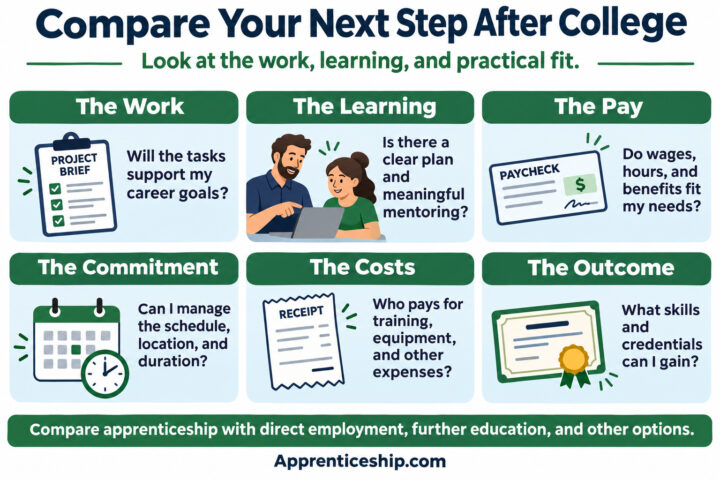
Compare Apprenticeship with Your Other Options
An apprenticeship is one possible next step after college. Compare it with direct employment, further education, and other opportunities based on your goals and circumstances.
The Work
- Will you perform tasks that help you develop toward the career you want?
The Learning
- Is there a clear training plan, meaningful mentoring, and regular feedback?
The Pay
- Can you manage on the starting wage? What benefits, hours, and wage progression are offered?
The Commitment
- How long does the program take? Where will you work, and how does instruction fit around the job?
The Outcome
- What skills and credentials will you gain? What employment or advancement opportunities may follow?
Further education may still be necessary for some careers. Confirm the qualifications and licensing requirements of the occupation you want to enter.
Understand the Program You Are Considering
Registered Apprenticeships
- Registered Apprenticeship programs operate within a federal or recognized state registration framework. Confirm the program’s registration status and ask about its training, wage progression, and completion credential.
Learn About Registered Apprenticeship
Employer Apprenticeship Programs
- Employers may also offer apprenticeships outside the Registered Apprenticeship system. Their structure and credentials vary.
- Ask for a clear explanation of the employment arrangement, mentoring, training, assessment, and completion requirements.
Other Paid Development Programs
- Selected graduate rotational and leadership development programs may also offer structured training and work experience. These are separate program types and should be evaluated according to their actual responsibilities, pay, supervision, and learning arrangements.
Questions to Ask Before Applying
Am I Eligible?
- Does the program accept college graduates? Are there specific education, experience, location, or other requirements?
What Will I Earn?
- What is the starting wage? How are increases determined? Are benefits available?
Who Will Guide My Learning?
- Who is my mentor or supervisor? How often will I receive feedback?
What Training Will I Complete?
- What will I learn on the job? Who provides related instruction, and is instruction time paid?
What Costs Should I Expect?
- Who pays for tuition, tools, equipment, examinations, transportation, and other expenses? Are there repayment agreements or other conditions?
What Will I Receive?
- What completion credential, college credit, certificate, or other recognition is available?
What Happens Afterward?
- What opportunities may follow completion? Ask about continued employment and advancement rather than assuming either is guaranteed.
How to Get Started
Identify Careers That Interest You
- Consider whether you want to build on your degree or explore a different field.
Search Apprenticeship Opportunities
- Read listings carefully for the work, qualifications, location, schedule, training, and application requirements.
Explain What You Bring
- Prepare to discuss relevant coursework, projects, employment, volunteering, and other experience. Connect your background to the work and explain why you want to learn through apprenticeship.
Contact the Employer or Sponsor
- Ask about eligibility and any details missing from the listing.
Apply Directly
- Follow the employer or program’s instructions. Prepare the requested documents, assessments, and interview materials.
Common Questions
Are These Apprenticeships Only for College Graduates?
- No. This page explains apprenticeship as an option after college. Individual programs may accept applicants with different educational backgrounds.
Do I Have to Work in the Same Field as My Degree?
- Not necessarily. Your eligibility depends on the program’s requirements and the occupation you want to enter.
Will My Degree Let Me Finish Faster?
- Possibly, but it is not automatic. Ask whether the program recognizes relevant coursework, experience, or demonstrated skills.
Will I Earn More Because I Have a Degree?
- Do not assume so. Ask how starting wages and increases are determined.
Is Apprenticeship Only for Recent Graduates?
- No. Adults at different career stages can explore apprenticeship. Check each program’s eligibility and practical requirements.
Can an Apprenticeship Include More College Study?
- Some programs connect employment with college instruction or credentials. Ask how the learning relates to your existing education and career goals.
Take Your Next Step
Explore the work you want to do, compare programs, and find an apprenticeship that fits your goals.
Explore the Apprenticeship Career Catalog
Program requirements, pay, costs, and opportunities vary and can change. Confirm current details directly with the employer, program sponsor, or college.
Apprenticeship.com is an independent resource. Not affiliated with or operated by the U.S. Department of Labor or Apprenticeship.gov.

 Majors with the Highest Unemployment Rate

 Salary Information - What Does a Job Pay?
 What are Internships