

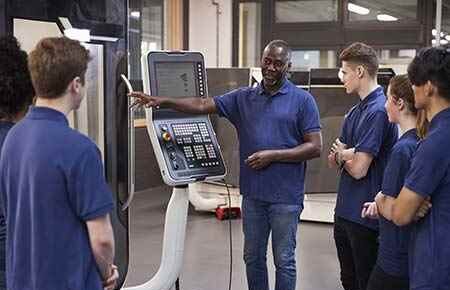
The Apprenticeship Model
The apprenticeship model of career and vocational training education is a structured system in which individuals learn a profession through a combination of paid employment, supervised hands-on training, and formal technical education. It is built on the principle of “earn while you learn,” blending practical experience with classroom-based instruction.
Traditional Foundation
Historically, apprenticeships were concentrated in skilled trades such as construction, metalworking, and mechanical repair. Apprentices worked under experienced professionals, gradually increasing their responsibilities while completing related technical instruction. Completion typically led to certification or recognized occupational status.
Modern Apprenticeships: Expanded Across Industries
Today, apprenticeships exist across a wide range of sectors — not just trades. Modern programs can be found in:
- Healthcare
- Robotics and advanced manufacturing
- Information technology and cybersecurity
- Finance and banking
- Education
- Energy and utilities
- Business management
- Creative and digital media
- Public service and government
- Engineering fields
The apprenticeship model has expanded into high-skill, technology-driven industries.
The shift is that apprenticeships now apply to both technical and professional careers, not just manual labor roles.
Structure of a Modern Apprenticeship
Modern apprenticeships typically include:
- Paid employment with a sponsoring employer
- Structured on-the-job training with measurable skill development
- Classroom or technical instruction (through a college, university, or training provider)
- Industry-recognized certification or qualification
Training may be time-based, competency-based, or a hybrid of both.
Degree Apprenticeships
One of the most significant modern developments is the degree apprenticeship model.
In this system:
- The apprentice is employed in a relevant role
- The employer partners with a college or university
- The apprentice completes academic coursework toward a bachelor’s or sometimes master’s degree
- College credits are earned while working
- Practical workplace learning directly reinforces academic theory
For example, apprentices may work toward degrees in engineering, nursing, business administration, computer science, or other professional disciplines while gaining several years of industry experience.
This model integrates:
- Academic education
- Technical skill development
- Professional work experience
All at the same time.
Core Idea of the Apprenticeship Model
Regardless of industry, modern apprenticeships share common principles:
- Learning is integrated with productive employment
- Skills are developed progressively
- Education and practice reinforce one another
- The learner graduates with both credentials and real-world experience
In Summary
Healthcare and robotics are only illustrations of a much broader trend. Modern apprenticeships now span traditional trades, high-tech industries, and professional careers. The model has evolved from a trade-based training system into a flexible pathway that can lead to certifications, licenses, or even full academic degrees — all while building hands-on competence in a real work environment.