

How Apprenticeships Work
Get Paid. Learn on the Job. Gain Work Experience.
What is an Apprenticeship?
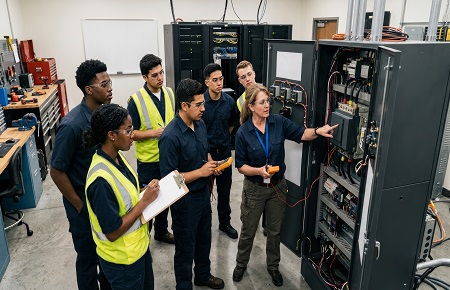
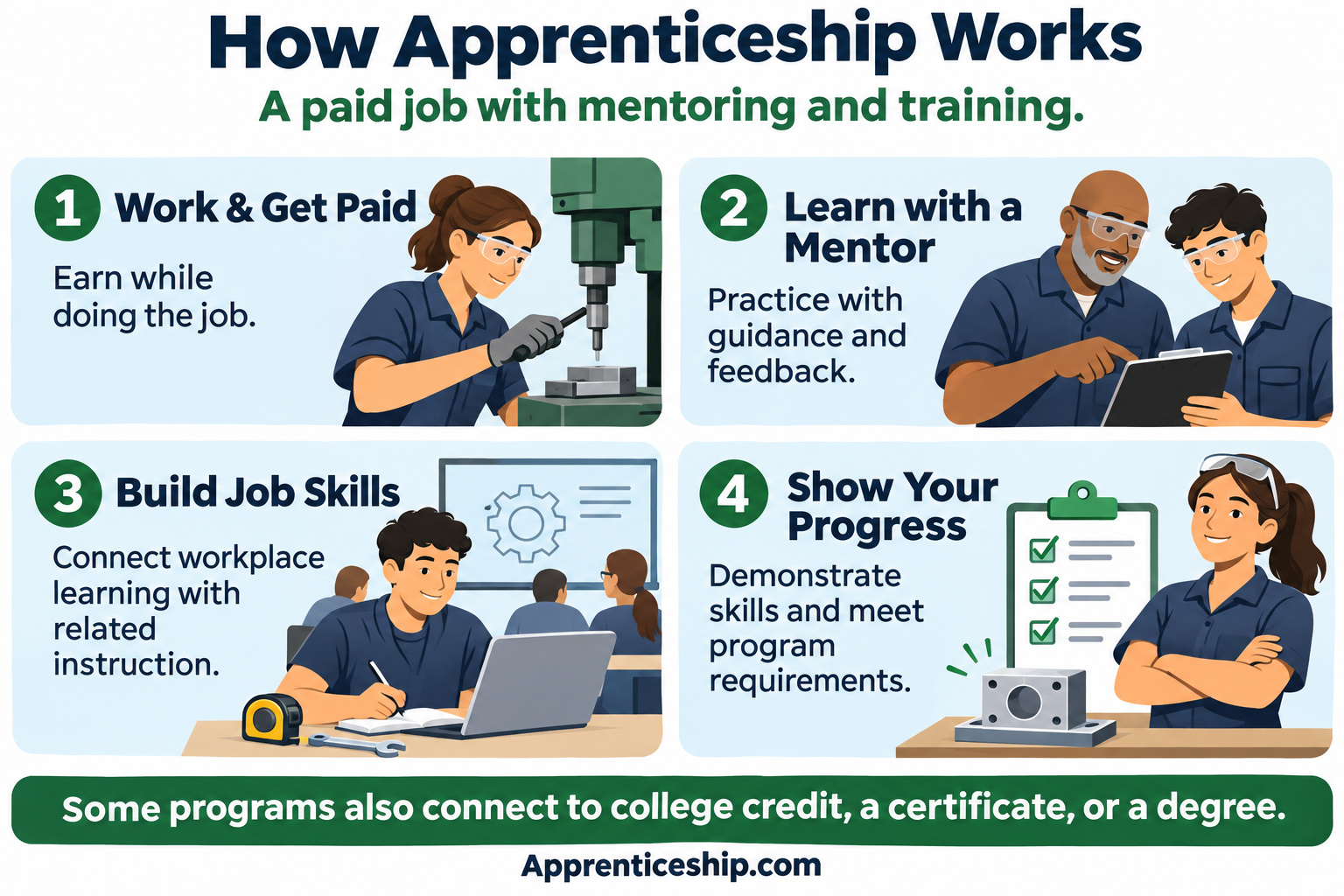
- An apprenticeship combines a paid job, guidance from an experienced and skilled mentor, and training designed around the work. You develop practical skills by doing the job while learning the knowledge behind it.
- Apprenticeship can help you start a career, build on your education, or change direction. Some programs also connect to college credit, a certificate, or a degree.
- Apprenticeships can be found in fields including Manufacturing, Business, Healthcare, I.T., Engineering, Energy, Transportation, Telecom, Education, Finance, Hospitality, Fine Arts, Human Services, and Government.
- Programs differ in entry requirements, structure and credentials.
Explore the Apprenticeship Career Catalog
What You Do as an Apprentice
Work and Earn
- You work for an employer and receive pay while developing your skills. Your responsibilities can grow as you become more capable.
- Before applying, ask about starting wages, work hours, benefits, and how pay increases are determined.
Learn with a Skilled Mentor
- An experienced worker guides your learning, demonstrates tasks, answers questions, and provides feedback. You practice applying your skills to actual workplace responsibilities.
- Ask who will supervise you, how mentoring works, and how your progress will be reviewed.
Complete Training Connected to the Job
- Apprenticeship includes learning that supports the work you do. Related instruction may take place through an employer, college, training organization, or program sponsor.
- Depending on the program, instruction may include classes, online learning, laboratory practice, or other organized training.
Demonstrate Your Progress
- Programs may assess progress through demonstrated skills, completed assignments, examinations, training hours, or a combination of these.
- Ask what you must complete, how long the program is expected to take, and what credential you will receive.
Understand the Different Apprenticeship Pathways
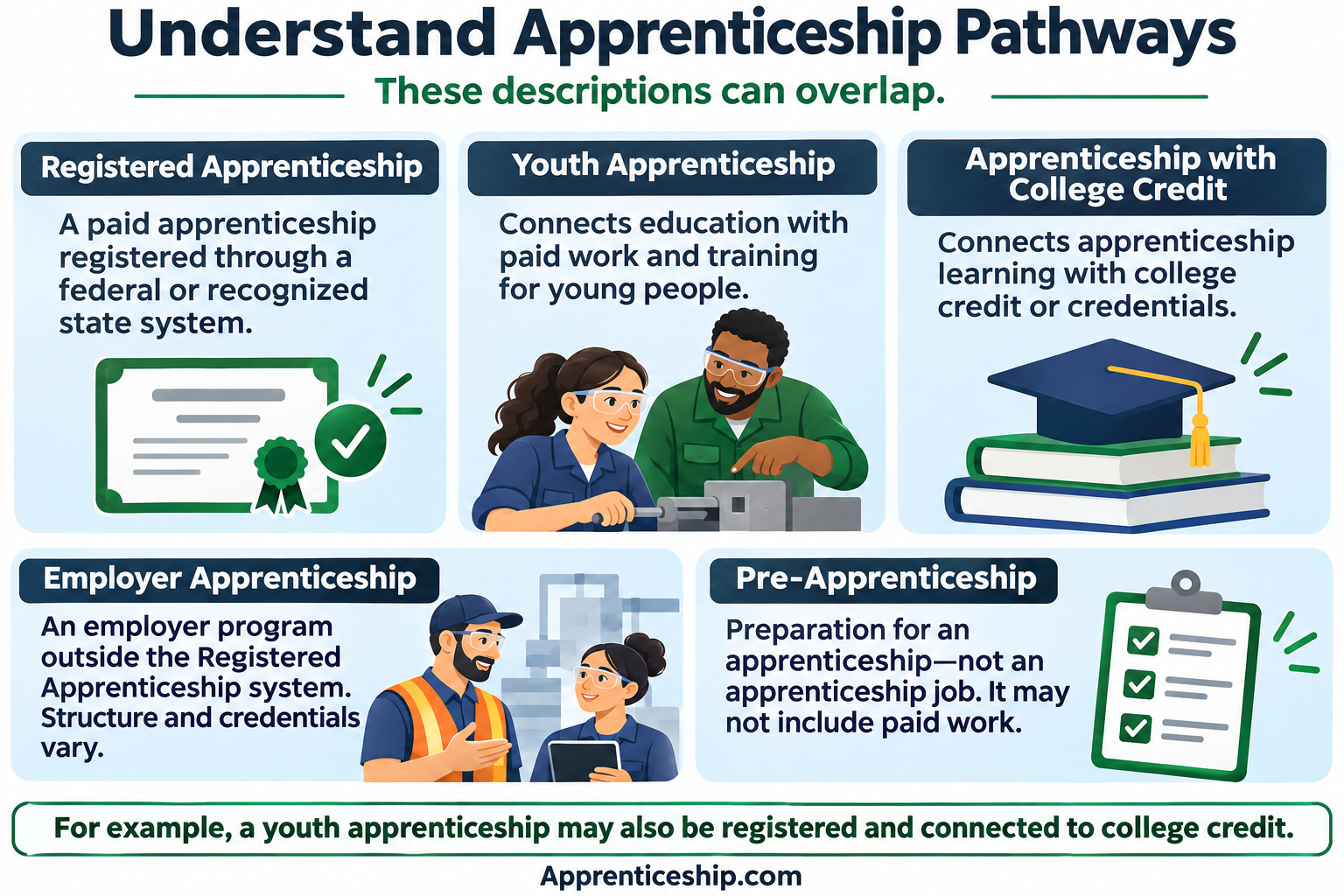
These descriptions can overlap. For example, a youth apprenticeship may also be registered and connected to college credit.
Registered Apprenticeship
- Registered Apprenticeship programs are registered through the federal or a recognized state apprenticeship system. They combine paid employment, structured workplace learning, mentoring, related instruction, progressive wage increases, and a recognized completion credential.
- Ask which agency registers the program and how to confirm its status.
Learn About Registered Apprenticeship
Employer Apprenticeship Programs
- Some employers offer apprenticeship programs outside the Registered Apprenticeship system. Their training arrangements, mentoring, wage progression, and credentials vary.
- Ask for a clear description of the job, learning plan, supervision, completion requirements, and credential. The word “apprenticeship” alone does not establish a program’s registration status.
Youth Apprenticeship
- Youth apprenticeships connect education with paid work and training for young people. Eligibility, school participation, work schedules, and program structure vary.
- Students should ask how the work fits with school requirements and what opportunities follow completion.
Apprenticeships with College Credit
- Some apprenticeships connect employment and training with college courses, certificates, or degrees.
- The employer or sponsor generally provides or arranges the job and workplace learning. A college may provide related instruction and award academic credit.
- Ask which college is involved, what credit or credential you can earn, whether credits transfer, and who pays tuition and fees.
Pre-Apprenticeship Programs
- Pre-apprenticeship helps people prepare to enter an apprenticeship. Activities may include foundational skills, career exploration, academic preparation, and introductions to employers.
- Pre-apprenticeship is preparation rather than an apprenticeship job. It may not include paid employment, and completion does not automatically guarantee admission to an apprenticeship.
- Look for tuition-free preparation with clear connections to apprenticeship programs. Ask what support is available and what participants can do next.
Apprenticeships and College Can Work Together
Apprenticeship can fit into your education at different stages.
After High School
- Explore programs that match your education, interests, and qualifications. Some may connect workplace learning with further study.
While Attending College
- Ask about apprenticeships connected to your college, academic program, or career interests. Check how employment, instruction, and class schedules fit together.
After Completing a Degree
- A college degree does not automatically rule out apprenticeship. Depending on the employer and program, apprenticeship may help you apply your education, gain practical experience, or move into another field.
- Check each opportunity’s entry requirements rather than assuming you are eligible - or overqualified.
Search for Apprenticeship Opportunities on Apprenticeship.com
Apprenticeships vs. Internships
Both can provide workplace learning and experience, but their purposes and arrangements differ.
Apprenticeship
- An apprenticeship is a paid job with mentoring and organized training intended to develop skills in an occupation.
Internship
- An internship generally offers a defined period of workplace experience. It may help participants explore a field, apply classroom learning, complete projects, and develop professional skills.
- Internships may be paid or unpaid. Well-designed internships include learning goals, supervision, and feedback. Do not assume an internship lacks structure or mentoring.
Compare the Opportunity, Not Just the Title
Review the work, pay, training, supervision, duration, and expected outcomes. Ask whether the opportunity leads to a credential or college credit.
Read NACE’s Explanation of Internships
Other Terms You May See
Work-Based Learning
- Learning through work or workplace experiences. Apprenticeship is one form of work-based learning; other arrangements have different structures and requirements.
On-the-Job Learning
- Learning and practicing skills while carrying out work responsibilities, usually with guidance and supervision.
Related Instruction
- Organized learning that supports the skills and knowledge used on the job. It may be provided through classes, online instruction, laboratory activities, or other training.
Program Sponsor
- The organization responsible for operating an apprenticeship program. A sponsor may be an employer or another organization working with participating employers.
Paid Co-op
- A work experience connected to an educational program that combines employment with study. Participation may require current enrollment and coordination with a school or college.
Questions to Ask Before Applying
What Is the Job?
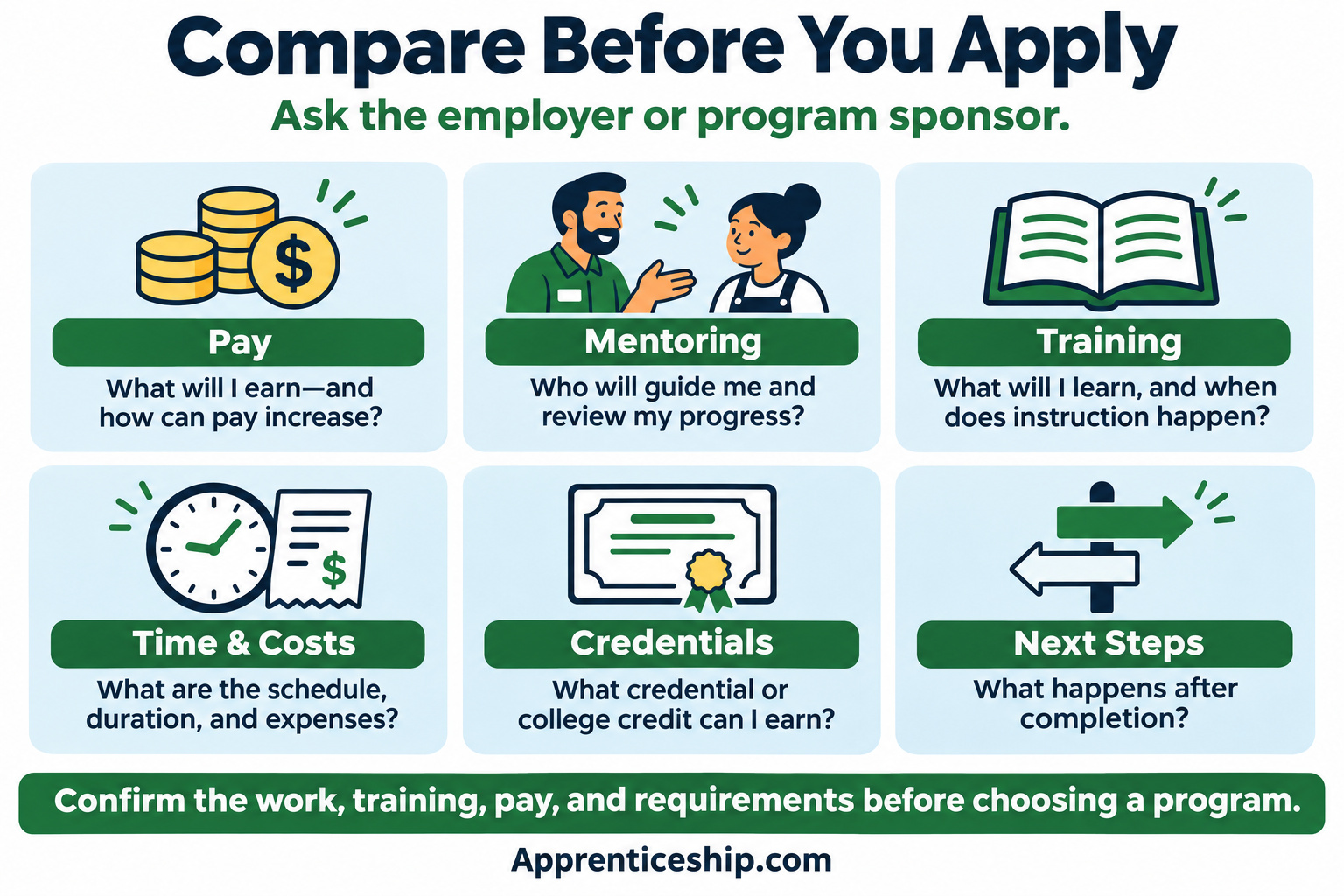
- Who will employ me? What tasks will I perform? Where will I work, and what conditions should I expect?
What Will I Earn?
- What is the starting wage? How are increases determined? What hours and benefits are offered?
Who Will Teach Me?
- Who is my mentor or supervisor? How much guidance will I receive, and how will I get feedback?
How Does Training Work?
- Who provides instruction? Where and when does it take place? Is classroom training time paid?
How Long Does the Program Take?
- What are the expected duration, weekly schedule, and completion requirements?
What Costs Should I Expect?
- Who pays for tuition, fees, tools, equipment, examinations, transportation, and other expenses? Are there repayment agreements or other conditions to review?
What Will I Receive?
- What completion credential, college credit, certificate, or degree is available? How is progress assessed?
What Happens After Completion?
- What employment or advancement opportunities may follow? Ask about the employer’s arrangements rather than assuming continued employment is guaranteed.
How to Find an Apprenticeship
Explore Careers
- Use the Apprenticeship Career Catalog to learn what workers do, where they work, how careers are changing, and ways to prepare.
Explore the Apprenticeship Career Catalog
Search Opportunities
- Look for employers and programs offering work and training in your chosen field. Read the location, qualifications, schedule, and application instructions.
Find Apprenticeships on Apprenticeship.com
Explore Official Apprenticeship Resources
Confirm Program Details
- Contact the employer or sponsor with questions about pay, mentoring, training, credentials, registration, and eligibility.
Prepare and Apply
- Follow the application instructions. Requested materials may include a résumé, education records, assessments, or an interview.
Common Questions About Apprenticeships
Do I Need Previous Experience?
- Some programs accept applicants with little related experience; others require particular preparation. Check the individual requirements.
Do I Need a College Degree?
- Requirements vary by occupation, employer, and program. Some opportunities do not require a degree; others have specific education requirements.
How Long Does an Apprenticeship Take?
- Duration varies. Ask about the expected timeline, required instruction, workplace learning, and how completion is determined.
Are All Apprenticeships Registered?
- No. Confirm the status of each program and understand what its registration, training, and credentials mean.
Read About Registered Apprenticeship
Does Every Apprenticeship Lead to a Degree?
- No. Some connect to college credit, certificates, or degrees. Others award different completion credentials.
Can a Career Change be Done Through Apprenticeships?
- Yes. Review eligibility, starting pay, schedules, and training to decide whether a particular opportunity fits your circumstances.
Take Your Next Step
Explore the work, compare programs, and find an apprenticeship that fits you.
Additional Resources
Apprenticeship.gov: Career Seeker Resources
Apprenticeship.gov: Apprenticeships and Internships
National Association of Colleges and Employers: Understanding Internships
Program requirements and opportunities vary and can change. Confirm current details directly with the employer, program sponsor, or college.
Apprenticeship.com is an independent resource. Not affiliated with or operated by the U.S. Department of Labor or Apprenticeship.gov.