


Youth Apprenticeships
Get Paid. Learn Through Work. Explore Your Future.
Youth apprenticeship connects education with paid work, mentoring, and training. It gives young people opportunities to explore an occupation, develop skills, and gain experience while continuing their education.
Some programs begin in high school and may connect to college courses or credentials. Others serve young adults after high school. Eligibility and arrangements vary by program.
What Is a Youth Apprenticeship?
An apprenticeship combines a paid job, guidance from experienced workers, and training related to the work. Youth apprenticeships adapt that approach for young people, often through partnerships involving employers, schools, colleges, and workforce organizations.
The term “youth apprenticeship” does not describe one identical program nationwide. Ask who operates the program, whether it is registered, how education and employment connect, and what participants complete.
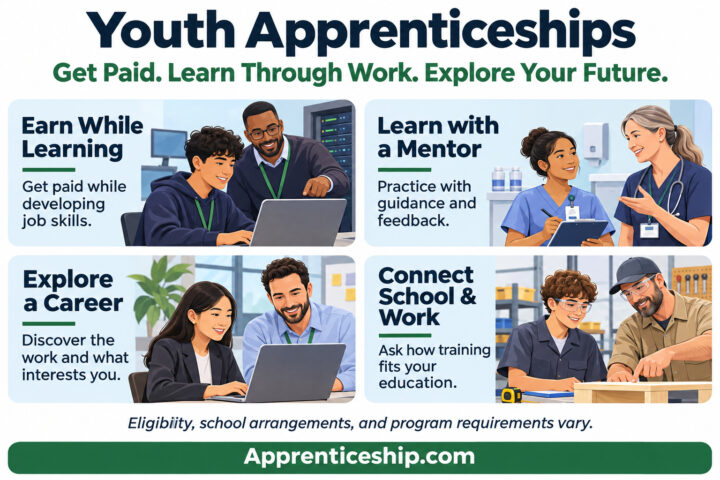
What Could You Gain?
Paid Work Experience
- Experience workplace responsibilities while earning wages. Ask about starting pay, hours, benefits, and opportunities for increases.
Guidance from Experienced Workers
- Learn tasks, ask questions, practice skills, and receive feedback. Find out who will supervise and support you.
A Clearer Understanding of a Career
- See what the work involves before making further education and career decisions. Consider the tasks, setting, schedule, and skills—not just the job title.
Connections Between School and Work
- Some programs coordinate workplace learning with high school coursework, career and technical education, or college instruction. Confirm the arrangements with your school.
Skills You Can Explain to Future Employers
- Keep track of assignments, projects, training, and feedback. These can help you describe what you have learned and the responsibilities you have handled.
How Does It Fit with High School?
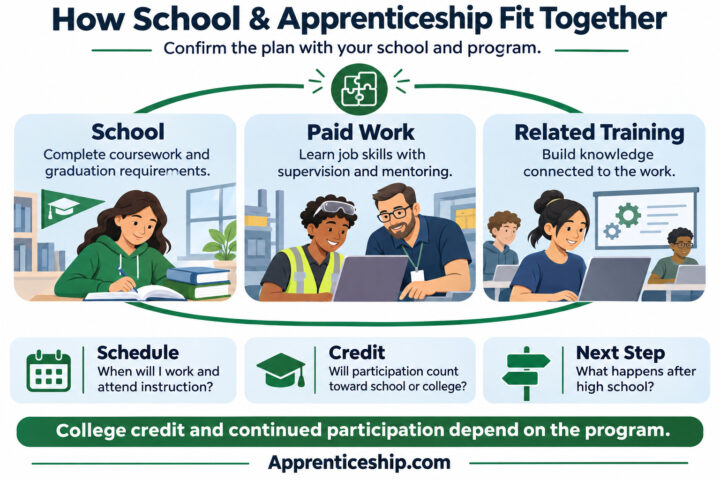
A school-connected program should have a clear plan for coordinating work and education. Depending on the arrangement, work may take place during approved school hours, after classes, during breaks, or over the summer.
Before committing, meet with your counselor or work-based learning coordinator. Ask:
- How does participation fit my graduation requirements?
- Will I receive high school or college credit?
- Which classes must I take?
- How will work affect attendance, homework, activities, and examinations?
- Who communicates with the employer?
- What happens if my school or work schedule changes?
Get school approval and confirm academic arrangements before assuming a placement will count toward graduation.
Apprenticeship and College Can Work Together
A youth apprenticeship does not necessarily mean choosing employment instead of college.
Some programs connect workplace training with college instruction. A program may continue beyond high school, and its college connections may differ from those of another apprenticeship.
Ask the school, college, and sponsor:
- Which college participates?
- What credit or credential can I earn?
- Who pays tuition, fees, books, and equipment costs?
- Will credits apply toward a certificate or degree?
- What happens if I change colleges or programs?
Understand the Opportunity You Are Considering
Registered Apprenticeship
- Registered Apprenticeship operates within a federal or recognized state registration framework. It combines paid work, mentoring, related instruction, wage progression, and a recognized completion credential. Some registered programs serve young people.
Learn About Registered Apprenticeship
Employer or School-Connected Programs
- Other employers and education partners may offer programs described as youth apprenticeships outside that registration framework.
- Review the actual work, training plan, supervision, pay, and outcomes. Confirm registration rather than assuming it from the title.
Pre-Apprenticeship
- Pre-apprenticeship prepares participants for an apprenticeship or a related next step. It is not the same as holding an apprenticeship job and may not include paid employment.
- Look for tuition-free preparation with clear employer or apprenticeship connections. Ask what successful participants can do next; admission or employment is not automatically guaranteed.
Other School Work Experiences
- Career and technical education, paid co-ops, job shadowing, and internships can have different purposes and arrangements. Ask your school to explain which type of opportunity is being offered and how it connects to your goals.
Who Can Apply?
Requirements depend on the employer, occupation, school partnership, and program.
Check:
- Minimum age and eligible school years.
- Whether current enrollment is required.
- Education or coursework prerequisites.
- Attendance or academic expectations.
- Assessments, interviews, and application deadlines.
- Transportation and scheduling requirements.
If you have left school or recently graduated, ask whether the program serves young adults outside a high school partnership.
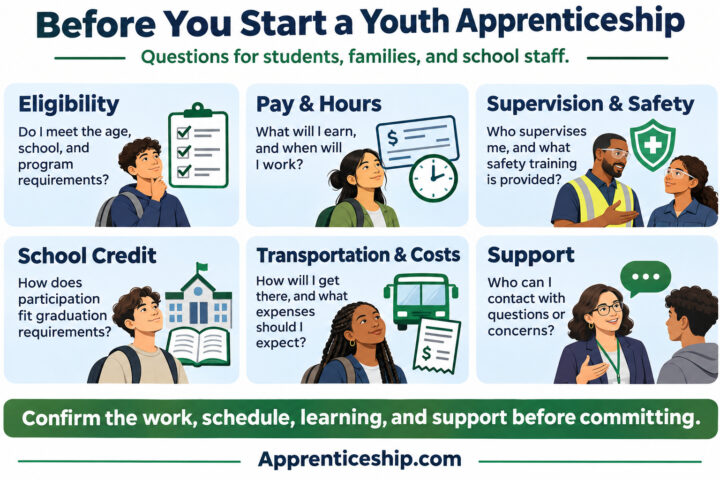
Questions About Safety and Support
Before starting, students, families, and school staff should understand the work and available support.
Who Will Supervise Me?
- Ask who is responsible for daily supervision, training, and feedback.
What Tasks Will I Perform?
- Request specific examples. Have the employer and school confirm that assigned tasks and hours are appropriate and permitted for your age.
What Safety Training Will I Receive?
- Ask about orientation, equipment, protective clothing, and procedures for reporting concerns.
How Will I Get There?
- Confirm transportation to the workplace and any instruction site. Consider the reliability, cost, and time involved.
Who Can Help If Something Goes Wrong?
- Identify contacts at the employer and school. Ask how to report a problem, request support, or discuss a placement that is not working out.
How to Find a Youth Apprenticeship
Explore Careers
- Use the Apprenticeship Career Catalog to learn about occupations, tasks, workplaces, and ways to prepare.
Explore the Apprenticeship Career Catalog
Start with Your School
- Contact your school counselor, career and technical education office, or work-based learning coordinator. Ask about participating employers and application timelines.
Search Opportunities
- Review listings and official resources. Some opportunities recruit through school or regional partnerships, so ask local contacts as well as searching online.
Find Apprenticeships on Apprenticeship.com
Explore Apprenticeship Resources for Young People
Compare the Details
- Review pay, tasks, mentoring, instruction, school credit, costs, transportation, and what happens after completion.
Prepare and Apply
- Follow the program’s instructions. Describe relevant coursework, school projects, volunteering, activities, and employment experience.
For Parents, Guardians & Counselors
- Help students compare the opportunity with their interests, education plans, and practical circumstances.
- Review the training plan together. Discuss the work, supervision, transportation, schedule, costs, and academic arrangements. Encourage the student to ask questions and understand their responsibilities.
Read Official Information About Apprenticeship for Young People
Common Questions
Is a Youth Apprenticeship Paid?
- An apprenticeship includes paid employment. Confirm the wage and employment arrangement. Preparation programs and other school work experiences may operate differently.
Do I Need Previous Work Experience?
- Some opportunities accept applicants with little experience; others require particular preparation. Check the individual requirements.
Can I Continue to College?
- Some programs connect to college learning. Ask how participation fits your plans and whether credit or credentials are available.
Are All Youth Apprenticeships Registered?
- No. Confirm each program’s registration status, training structure, and credentials.
What Happens After High School?
- Depending on the program, you may continue the apprenticeship, complete it, or pursue another employment or education option. Ask about the expected next step before enrolling.
Next Steps
Explore a career, talk with your school, and find an opportunity to learn through paid work.
Eligibility, permitted work, school arrangements, and program requirements vary. Confirm current details with the employer, sponsor, school, and relevant official agencies.
Apprenticeship.com is an independent resource. Not affiliated with or operated by the U.S. Department of Labor or Apprenticeship.gov.